
Check in
Short and friendly. Regular visits after your report of findings are quick.
We look at how your spine and nervous system are working, then adjust specifically where the exam shows it is needed, with a plan that can include light stretching, exercise and nutrition.
An adjustment is only as good as the information behind it. Before anyone adjusts you at Bonfire, our clinic in north Meridian, a chiropractic assistant runs a nerve scan, the doctor takes your history and performs a thorough exam including spinal palpation, and X-rays are taken the same day.
That is why the first adjustment happens on the second visit, after the report of findings. You hear what was found, in plain language, and the care recommended is built on it.
Short and friendly. Regular visits after your report of findings are quick.
Gentle and specific to the segments your findings pointed to. The amount of pressure is matched to the patient; an infant's adjustment uses about the pressure you would use to check a ripe avocado.
Stretches, movement or corrective exercise where it helps. Wellness visits for established patients are typically one to four times a month depending on lifestyle and goals.
Bonfire is a neurologically based practice. The doctors use the Torque Release Technique as their analysis: a system for finding which segments of the spine need attention and in what order, before anything is adjusted. Dr. Barker adjusts mostly by hand once the analysis is done; both doctors also use instrument adjusting where the patient or the findings call for it. The pressure is matched to the person, which is one reason the same office can care for a newborn and a grandparent.
Which approach is used, and how much pressure, depends on your findings, your age and what you are comfortable with. Tell the doctor if you have a preference.
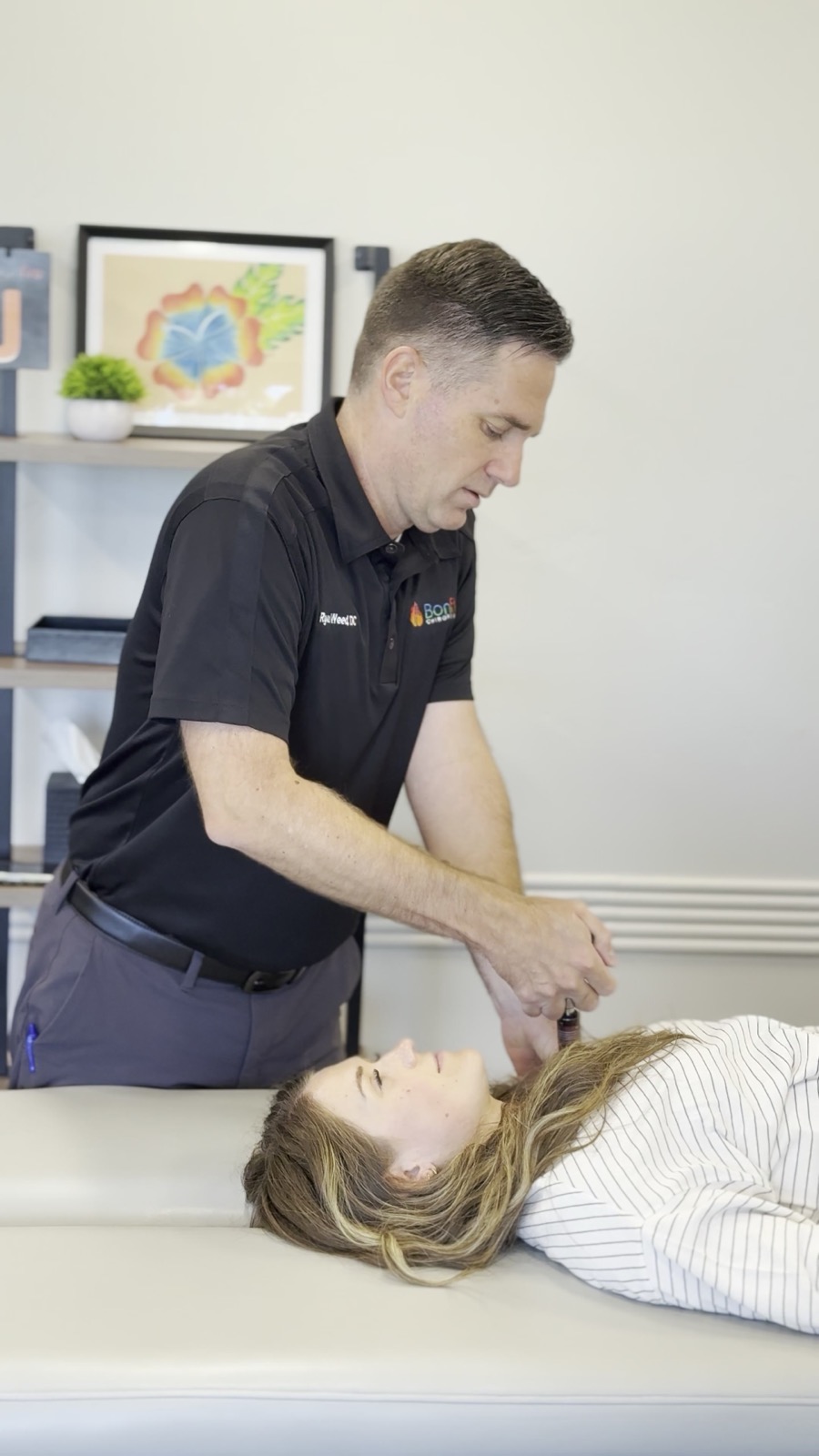
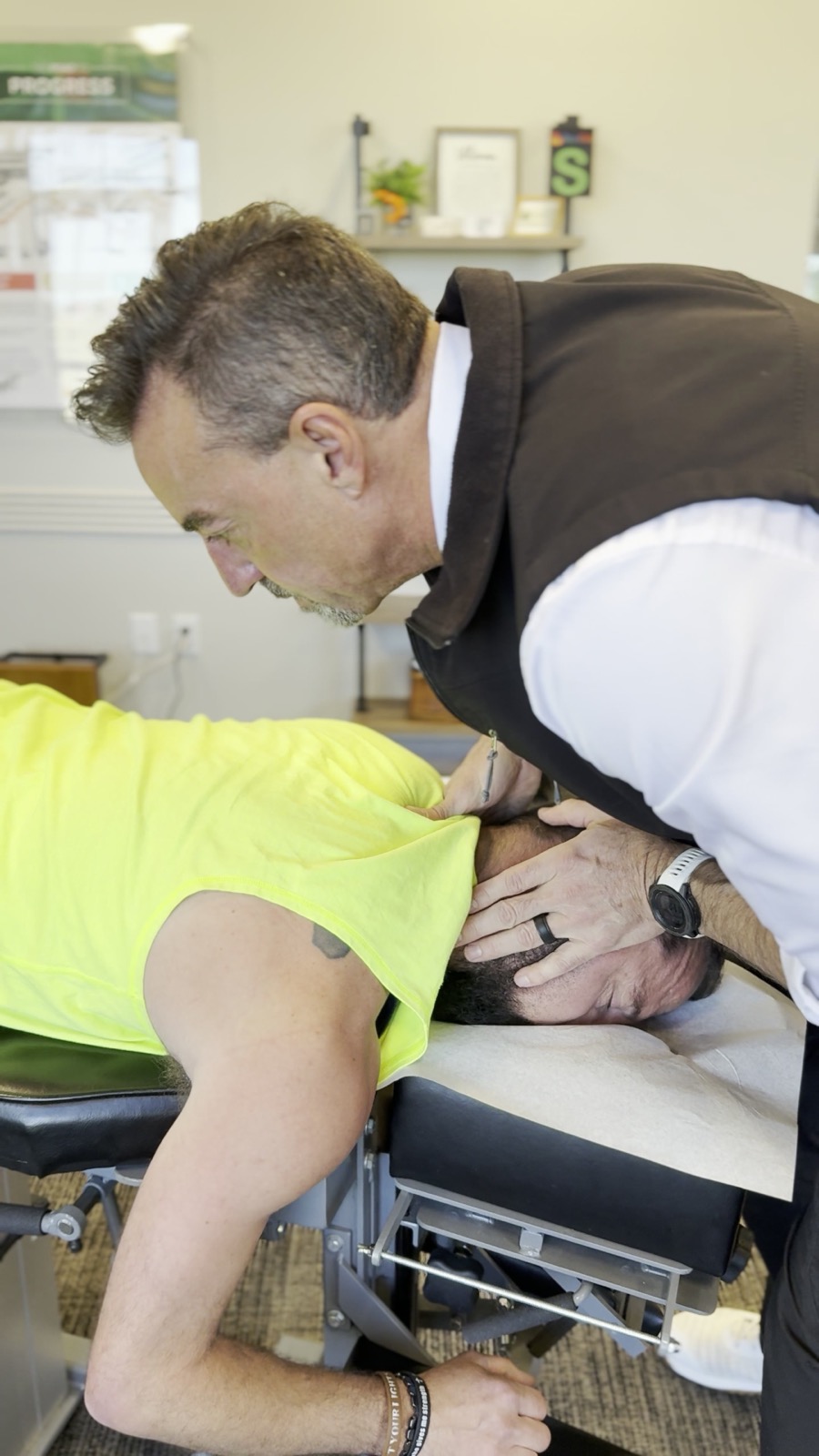
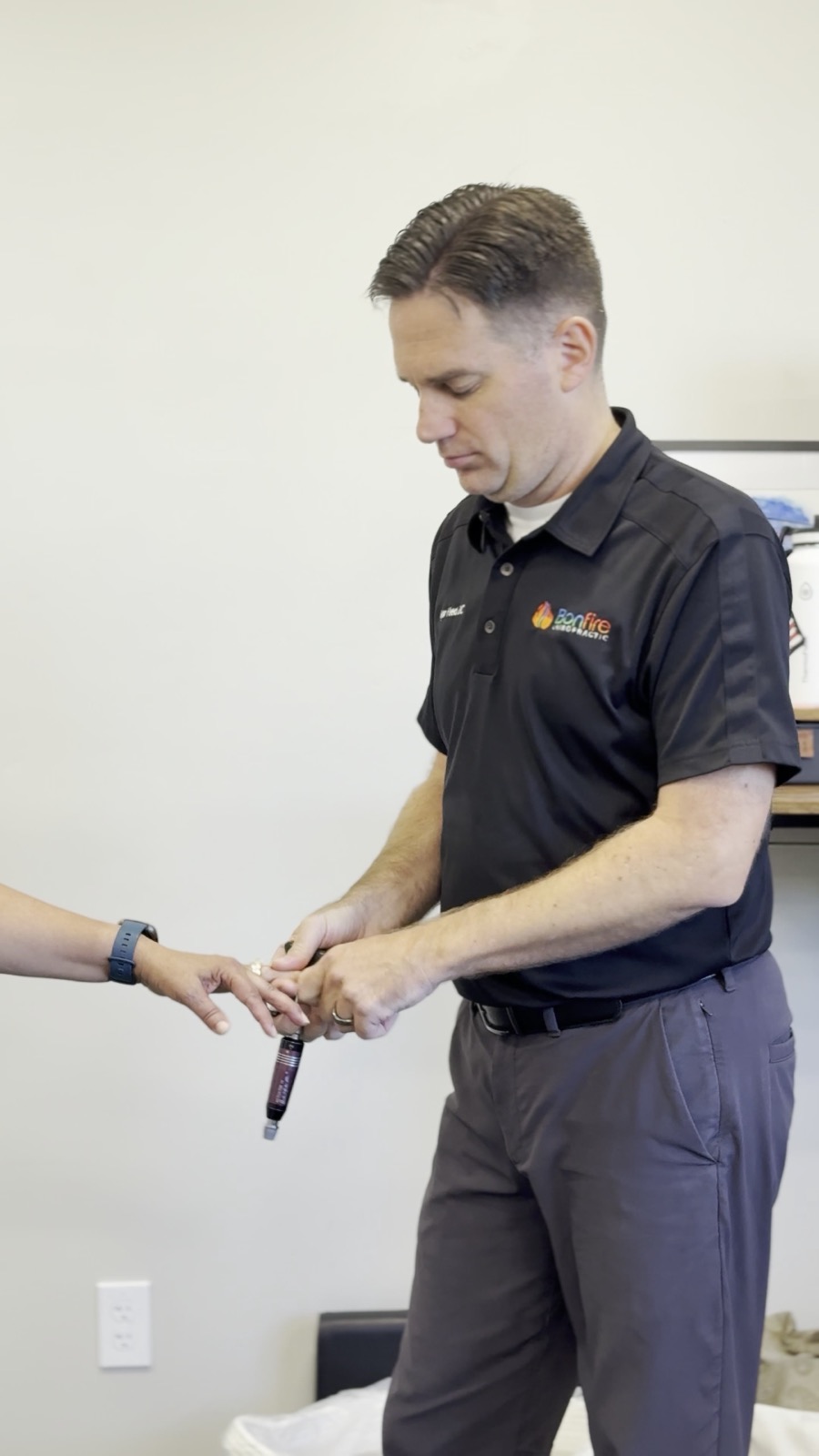
Most patients describe it as relief or pressure rather than pain. Instrument techniques like Torque Release and Activator use a light impulse; hands-on and drop-table adjusting are controlled and specific. Tell the doctor if anything is uncomfortable; the approach is adjusted to you.
No. The noise you hear is gas leaving the joint, not bones grinding. The same is true of the sound you may hear during some adjustments.
That depends on your findings and goals. The doctors explain their recommendation at the report of findings. Established patients in wellness care typically visit one to four times a month.
The doctors like to see the structure of the spine in most patients, to avoid adjusting an area that should not be adjusted. If you have had images in the last year, bring them.